
How Natural Food Color Powder Can Simplify Food Formulation
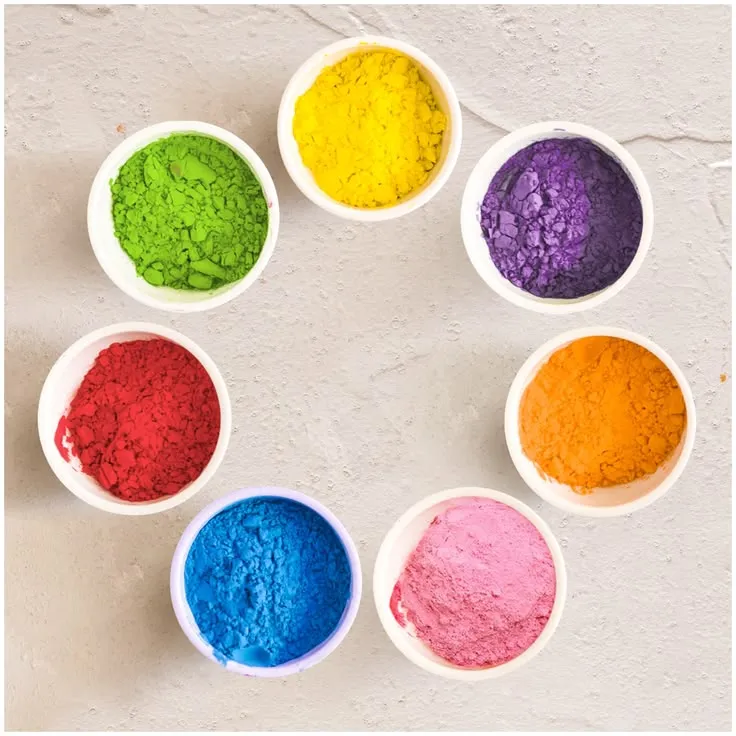
Food makers often build recipes with lots of dry stuff. Because of that, picking the right format matters big time in product dev. Powders just kind of make sense for most factory setups—especially if you blend everything up right before cooking or bagging it. Natural food coloring powder can provide manufacturers with a practical format for developing attractive shades across suitable food applications. Understanding how powdered colors are selected, tested, and incorporated can help product developers create an efficient formulation process.
Start With the Product Application
The use of a powdered color should be determined by the food product to which it will be applied. The manufacturer may need to think about whether the product is a dry mix, a confectionery product, a bakery product, a powdered beverage, a snack, a dessert preparation or is otherwise suitable.
Different requirements may exist for the intensity of colors, dispersion, moisture, and processing in each category. Some ingredients may be used in a different manner in one formulation compared to another. By identifying what the product needs prior to testing, development teams can concentrate on color options that are pertinent to their manufacture process.
Understand Natural Food Color Formats
Colors that are natural can be made in a variety of forms, such as powders and liquids. A powdered version may be beneficial in cases where the formulation already has dry ingredients which must be mixed.
The characteristics of usage, storage, measurement and dispersion of the ingredient can be taken into consideration by manufacturers. These pragmatic factors may affect the seamless use of a color in production. A sample of the selected ingredient in a representative formulation can give useful information on the performance of the selected ingredient in actual processing.
Consider the Role of Food Coloring Powder Suppliers
Collaborating with food coloring powder suppliers can give manufacturers an opportunity to experiment with various sources and formats of food coloring powder. The supplier can give information on the shades available, specifications of ingredients, areas of application, and handling conditions.
It is possible for product developers to communicate what food category they wish information to cover and what shade they are trying to achieve when asking for information. This enables supplier conversations to concentrate on ingredients that are more relevant to the particular application. Another reason for using samples is that they enable the manufacturer to test the product before they begin to buy in larger quantities.
Compare Different Color Sources
Various natural resources can give varying visual qualities. Yellow and orange can be achieved with turmeric and annatto; red or purple options are provided by beetroot and black carrot.
Other botanical sources are also available to provide other shades if needed for particular applications. With these options, manufacturers can make comparisons based on the look and formulation needs they are looking for. The best source will be the one that works best in the completed product, not as a stand-alone source.
Test Dispersion and Color Intensity
For powdered colors, there must be good dispersion in the food formulation. Small batches can be produced for manufacturers to test for consistent dispersion of the ingredient and for even shade.
The various concentrations can be compared to see the desired intensity of color. The mixing method and sequence of ingredients can also be assessed in these trials. This hands-on assessment can help developers develop a repeatable process prior to scaling up from the lab to commercial production.
Evaluate Processing Conditions
Food formulations may undergo several treatment processes such as mixing, heating, baking, cooling, freezing, drying and filling. Therefore, these conditions should be taken into account when developing color.
Manufacturers can reproduce crucial production processes and see how the powder behaves during processing. This can assist in deciding an addition stage and mixing process. It can also give valuable information relating to the finished product and its appearance when used under anticipated conditions, for Storage Testing.
Review Handling Requirements
Another point to think about is the ease of handling a powdered color. The manufacturer can assess the ease of measurement, transfer, mixing and incorporation into their process.
Storage needs should also be considered, with a view to being able to manage the ingredient in the production environment. Good technical information can help to set up appropriate procedures and ensure uniformity in multiple manufacturing runs.
Plan for Commercial Production
The successful formulation should be feasible at the production scale. Before deciding on colors, manufacturers may take into account the amount of the ingredients they are likely to use, the packaging, the order that they will place and future demand.
It may also be easier to repeat the production process if the chosen concentration & application technique is documented. When multiple products share a similar shade, manufacturers could establish their own shading specifications to support the development and production of multiple products.
Conclusion
Powdered natural colors can be conveniently used in numerous food formulations, especially in those in which an already present dry ingredient is a component. Manufacturers need to take into account the product application, the color source, the supplier information, color dispersion, processing conditions, handling and commercial supply requirements to establish a more structured color strategy. For those who are wondering what ingredients for powdered colors you should use in your next food formulation, check out foodrgb.com for options and keep working on your product development.


